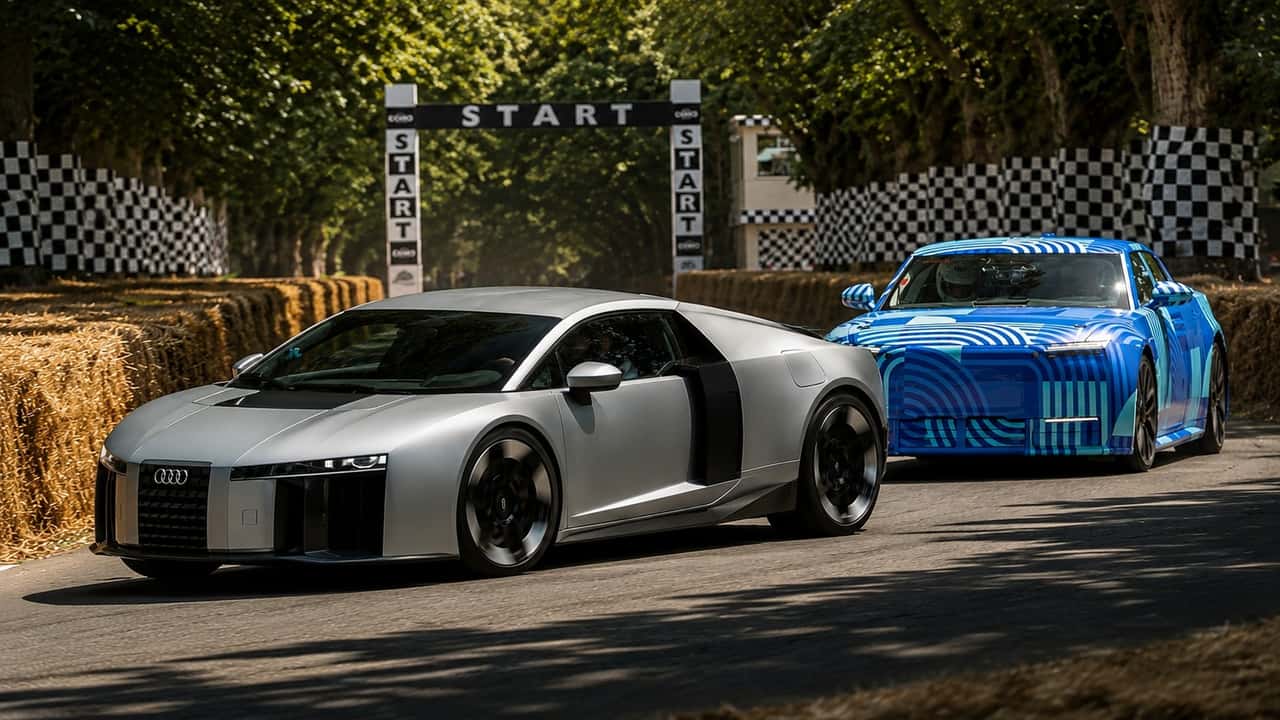
Future Shock: Audi Nuvolari and Jaguar Type 01 Ignite Goodwood Controversy
The hallowed grounds of the Goodwood Festival of Speed are synonymous with automotive excellence, a vibrant tapestry where legendary classics rub shoulders with the bleeding edge of future mobility. This year, amidst the roar of historic engines and the whisper of hyper-advanced powertrains, two electric concepts from venerable marques aimed to steal the show: the Audi Nuvolari and the Jaguar Type 01. Both vehicles arrived cloaked in an aura of avant-garde design, promising a glimpse into the electric future of their respective brands, and both certainly made an impression – just perhaps not the one their designers entirely intended.
As these electric disruptors ascended the iconic Goodwood hill climb, the initial anticipation quickly morphed into a torrent of online discourse. While Goodwood usually celebrates speed and beauty, the Nuvolari and Type 01 found themselves at the center of a different kind of storm: a digital maelstrom of opinion concerning their aesthetics. The internet, a notoriously unforgiving judge, was swift and largely brutal in its assessment. Comments ranged from "misshapen blobs" to "overdesigned appliances," with many struggling to reconcile the radical forms with the storied design legacies of Audi and Jaguar. The Nuvolari, with its unconventional proportions and potentially polarizing front fascia, and the Type 01, seemingly shedding all traditional Jaguar cues for something entirely alien, became instant lightning rods for criticism.
To truly understand these designs, one must delve into the evolving landscape of electric vehicle architecture. The "skateboard" platform, inherent to most modern EVs, grants designers immense freedom – and paradoxically, new constraints. With no engine block or transmission tunnel to contend with, cabins can be pushed forward, and proportions can become dramatically different. For Audi, the Nuvolari likely represents an exploration of their "sphere" concept philosophy, prioritizing interior space, autonomous capability, and a seamless digital experience over traditional sporting aesthetics. Jaguar's Type 01, on the other hand, is a bold statement from a brand committed to reinventing itself as an all-electric luxury powerhouse. It's an attempt to break free from historical design language, perhaps signaling a complete divorce from the past to embrace a truly radical, future-forward identity for their forthcoming range.
Automotive history is replete with examples of designs that were initially lambasted only to be celebrated as visionary years later. Think of the Porsche 928, derided by some purists upon its debut, or Chris Bangle's controversial BMW E60 5 Series, which redefined the brand's aesthetic direction for a generation. Even early electric vehicles, often constrained by battery packaging, presented unconventional silhouettes that took time for the public to accept. Are the Nuvolari and Type 01 merely the latest entries in this long line of design provocateurs? Or do they represent a step too far, an overcorrection in the pursuit of differentiation? The line between bold innovation and outright aesthetic miscalculation is often blurry, and public perception is a fickle beast.
The market implications of such polarizing designs are significant. In an increasingly crowded luxury EV segment, standing out is crucial, but at what cost? Audi and Jaguar are not just selling cars; they are selling dreams, aspirations, and a vision of the future. By pushing the boundaries so aggressively, are they risking alienating their established customer base, who might cherish traditional elegance and proportion, in the hope of attracting a new, more progressive clientele? The success of brands like Lucid Motors, with its more conventionally beautiful Air sedan, suggests that radical design isn't the only path to EV luxury success. These concepts force a conversation about brand identity: how much heritage can you shed before you lose your essence?
As the dust settles from Goodwood, and the internet continues its lively debate, one thing is clear: the Audi Nuvolari and Jaguar Type 01 have undeniably sparked a conversation. Whether they are prophetic visions of future beauty or cautionary tales of design gone awry remains to be seen. What they emphatically demonstrate, however, is that the electric revolution isn't just changing what's under the hood; it's fundamentally reshaping the very canvas upon which automotive artistry is expressed. And sometimes, that reshaping can be jarring, challenging our preconceived notions of what a beautiful car should be.