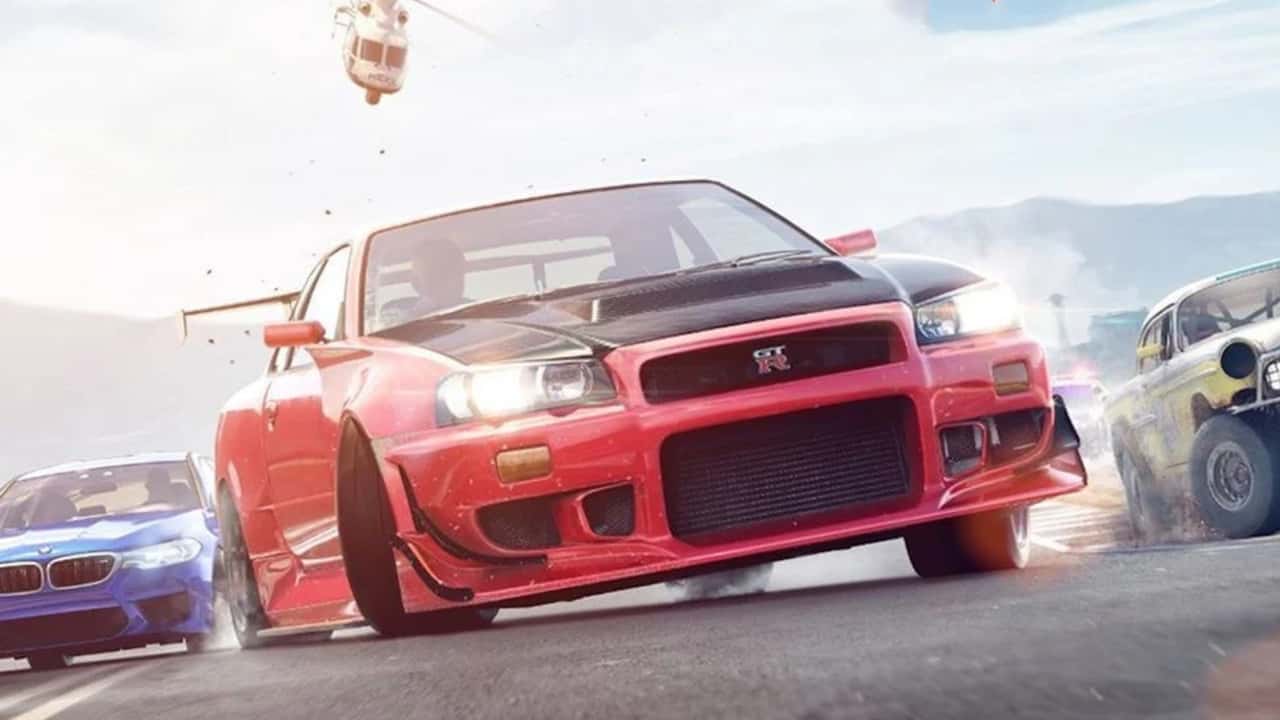
Is the Finish Line in Sight? Need For Speed Franchise Faces Existential Threat
The roar of finely-tuned engines, the flash of neon lights against rain-slicked streets, the adrenaline surge of outrunning the law – these are the hallmarks of the Need For Speed franchise, a series that has defined arcade racing for generations. But for fans, the familiar scent of burning rubber now carries a bitter note of uncertainty. Recent news that Criterion Games, the studio behind the latest installment, is "solely focused on Battlefield" sends a chilling message: the iconic Need For Speed may be running on fumes, its future hanging precariously in the balance. This isn't just a development hiccup; it feels like an existential crisis for a beloved automotive institution.
For many of us, Need For Speed wasn't just a game; it was a gateway to car culture. From the groundbreaking realism of the original 3DO title to the revolutionary street racing scene of *Underground* and the unforgettable police chases of *Most Wanted*, the franchise consistently pushed boundaries. It popularized car customization long before it became a mainstream gaming feature, letting us pour hours into perfecting our virtual rides. The sense of speed, the accessible handling, and the sheer joy of high-stakes racing created an unparalleled experience that cemented its place in gaming history and introduced countless enthusiasts to the thrill of automotive performance.
However, the road for NFS hasn't always been smooth. Following its golden era, the series struggled to find a consistent identity, oscillating between different sub-genres with varying degrees of success. While Criterion itself delivered some strong entries like *Hot Pursuit* (2010) and *Rivals*, and Ghost Games attempted a revival with *Heat* and *Payback*, the franchise seemed to lose its unique spark in a rapidly evolving market. The most recent title, *Need For Speed Unbound*, released in late 2022, was lauded for its distinct art style and solid gameplay, yet it didn't quite capture the widespread attention needed to truly reignite the series. It felt like a promising step, but perhaps too little, too late.
The revelation that Criterion is now exclusively dedicated to the *Battlefield* franchise is a stark reminder of the realities of modern AAA game development and publisher priorities. Electronic Arts, like any major publisher, must allocate its vast resources to projects deemed most likely to yield significant returns. *Battlefield*, despite its own recent stumbles, remains a titan in the FPS genre, a consistent revenue generator with a massive player base. Shifting Criterion's focus signifies a strategic decision to shore up one of EA's core pillars, potentially at the expense of a long-standing but recently underperforming racing series. It's a pragmatic, if heartbreaking, move for those of us who cherish NFS.
The current racing game landscape is fiercely competitive, presenting a significant challenge for any returning franchise. Titles like Playground Games' *Forza Horizon* series have perfected the open-world arcade racer, offering unparalleled car lists, stunning visuals, and endless activities. Meanwhile, *Gran Turismo* and *Assetto Corsa* cater to the simulation crowd, and niche titles like *F1* and *WRC* dominate their respective motorsports. Need For Speed, once a trendsetter, now finds itself struggling to carve out a unique space. To truly thrive, it needs not just solid gameplay, but groundbreaking innovation that sets it apart, something that requires sustained focus and significant investment – resources that now appear to be diverted elsewhere.
So, where does this leave the future of Need For Speed? Without a dedicated development studio, the path forward is murky. Will EA outsource it to another team, risking a further dilution of its identity? Or will the series be put on an indefinite hiatus, perhaps even a quiet retirement? The thought of a world without new Need For Speed titles is a grim one for anyone who grew up with its intoxicating blend of speed, style, and rebellion. This isn't just about a video game; it's about the potential loss of a cultural touchstone that ignited the passion for cars in millions. We can only hope that, like a finely-tuned super-car, the franchise finds a way to pull itself back from the brink, roaring back onto the scene with a vitality it so desperately needs.