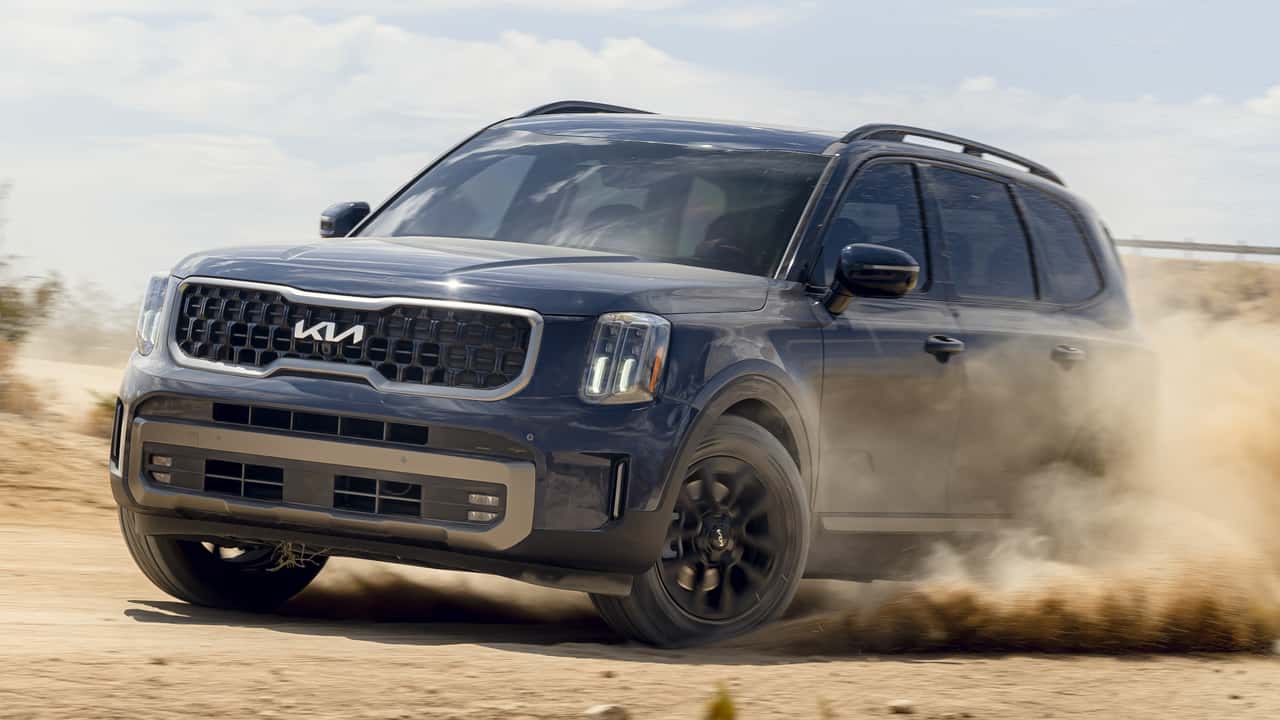
Le Kia Telluride Fait Face à un Deuxième Rappel pour Risque d'Incendie : 463 000 SUV Doivent Être Garés à l'Extérieur en Raison d'un Risque Persistant de Moteur de Siège
The automotive world is once again buzzing with news that sends a chill down the spines of car owners – Kia has issued a significant second recall for its popular Telluride SUV, affecting a staggering 463,000 units from model years 2020 through 2024. The directive is stark and unambiguous: owners are being instructed to park their vehicles outdoors and away from other structures, a clear indicator of the gravity of the underlying issue. This isn't just a minor fix; it's a critical safety alert stemming from the persistent risk of fire originating from the power seat motor, a problem that, disturbingly, a previous recall was meant to resolve.
At the heart of this alarming situation lies the front power seat motor, specifically the one controlling the seat's adjustability. Investigations have revealed that an improperly secured or misaligned seat slide knob can become jammed, causing the motor to continuously operate even when the vehicle is off and parked. This prolonged, unintended electrical activity leads to overheating of the motor assembly, which in turn significantly increases the risk of a thermal event – in plain language, a fire. This scenario is particularly insidious because it can occur without any warning, potentially while the vehicle is unoccupied, posing a serious threat to property and life. The initial recall, which involved inspecting and replacing the seat switch and adding a bracket, clearly did not fully mitigate the risk, prompting this more drastic, second intervention.
For Telluride owners, this news is undoubtedly unsettling. The instruction to park outside isn't just a recommendation; it's a lifeline, a preventative measure to minimize potential damage should a fire occur. Imagine waking up to find your vehicle, a significant investment and a crucial part of daily life, engulfed in flames in your garage, endangering your home and family. This isn't a theoretical risk; Kia has confirmed multiple incidents of seat motor fires, though thankfully, no injuries or fatalities have been reported to date. The immediate priority for owners is to heed the warning and contact their local Kia dealership for further instructions and to schedule the necessary repair as soon as parts become available.
The Telluride has been a resounding success for Kia, lauded for its upscale design, spacious interior, and impressive value proposition, catapulting the brand into the fiercely competitive three-row SUV segment with considerable force. This widespread popularity, however, now magnifies the impact of such a critical safety recall. While all manufacturers face recalls, a second recall for the *same* fire risk, especially one requiring owners to park their vehicles outdoors, inevitably casts a shadow on a brand's hard-earned reputation for quality and reliability. It raises questions about the robustness of initial design and testing protocols, and the efficacy of previous corrective actions.
Historically, automotive recalls have evolved significantly, from simple mechanical fixes to complex software updates and, unfortunately, critical fire risks. Regulatory bodies like the National Highway Traffic Safety Administration (NHTSA) in the U.S. play a crucial role in overseeing these actions, ensuring manufacturers take consumer safety seriously. This particular incident harks back to similar electrical fire risks seen in various models across the industry over the years, underscoring the complexities of modern vehicle electrical systems. The sheer volume of vehicles affected – nearly half a million – emphasizes the scale of the engineering challenge and the importance of thorough, iterative problem-solving.
Kia is currently developing a new remedy for this persistent issue, which is expected to involve a more comprehensive solution than the previous fix. Details on the exact nature of the repair and its availability are anticipated soon, with owners expected to receive official notification letters by late May. While the inconvenience of a recall is undeniable, especially one of this magnitude, the proactive measures taken by Kia and the clear instructions to owners are paramount. This situation serves as a potent reminder that even the most successful and celebrated vehicles can harbor unforeseen vulnerabilities, and that continuous vigilance in automotive safety remains an absolute necessity for both manufacturers and consumers.